By Hezekiah “Ky” Holland, originally published April 1, 2025
In 2020, I started asking the question, “What’s Next Alaska?” It was a question meant to challenge whether we had a plan for the future. The interest in that question led to years of weekly community meetings exploring the question and, in an ironic twist, switching from exploring the question to winning a seat in the Alaska Legislature and arguably becoming part of the problem!
I entered the 2024 House race because of the flat funding of education and concern for the loss of working-age adults and families in Alaska, who were leaving for what they felt were better schools and job opportunities outside of Alaska.
I learned that our reluctance to raise revenue to pay for quality public services for our communities was driving families from their communities and out of Alaska.
After 40 years, it’s time to end the “Alaska Disconnect,” where revenue from past investments subsidizes new jobs. We need a public revenue model that can invest in emerging sectors, including “… the small or nascent industries with high growth potential based on Alaska’s competitive advantages. They include mariculture, aerospace, energy technology, and agriculture, among others, which have the potential to diversify the state economy and ultimately become Economic Engines …” (Alaska Statewide Comprehensive Economic Development Strategy (CEDS) 2022-2027)
These industries and others, such as the current interest in hydrogen exports and data centers, if structured correctly, can generate not just jobs but meaningful revenue for the state. The revenue that comes from business success and can support, rather than burden, public safety, education and necessary infrastructure. To be clear, Alaska’s economic engine needs to evolve. We can no longer live off of savings and hope for the next oil price spike or take more money from those already living in poverty or our kid’s college savings accounts. We need a fair, modern revenue system that reflects today’s emerging economy — where wealth is increasingly generated by out-of-state workers who pay nothing for the state investments that make their jobs possible and privately held corporations who, under current law, contribute nothing in corporate income taxes to the state’s revenue. That’s not fair. And it’s not sustainable.
Alaska has long relied, and will continue to rely, on its natural resources for jobs and associated state revenue. Projects like Pikka, Willow and natural gas development will eventually generate new revenue. However, tax deductions, royalty relief and incentives to industry mean these projects will have a negative short-term effect on the state budget at a critical time when we need to stabilize our communities.
As a state, we need to grow and diversify our economy beyond the boom-and-bust resource cycles that promise prosperity but deliver volatility. Our savings are gone, and we can not continue to subsidize a model where new jobs create more fiscal liabilities than benefits because the people filling those jobs need schools, roads, and health care — and we have no new revenue to provide those things.
If we truly want to attract and retain Alaskans — especially the next generation — we need more than short-term job counts. We need the opportunities found in emerging-sector jobs along with vibrant communities with strong schools, safe neighborhoods, affordable energy, new business growth and career-oriented opportunities for all. That means aligning our economic growth strategy with a modern revenue strategy. A healthy private-sector economy cannot exist without an attractive and healthy civic economy.
Real, sustainable development means that as private industry and profits grow, so too does our shared civic capacity — our roads, schools, public safety, and the essential infrastructure that makes life in Alaska not just possible but rather, makes life in Alaska attractive enough to keep Alaskans from leaving, and that attracts them to come back.
I noted earlier that I entered the race to support education funding, but that was not enough to give up my work helping entrepreneurs and new startup businesses, or going to Trapper Lake in the winter. I committed myself to the race and this job because of the opportunities my friends, community, and I see in “What’s Next” for Alaska’s future.
The choice is simple: Do we continue to manage a slow decline or invest in a future where our private economy and public institutions can grow together?
Let’s choose the future that excites and inspires the next generation of Alaskans. Let’s build it — strategically, sustainably, and together.
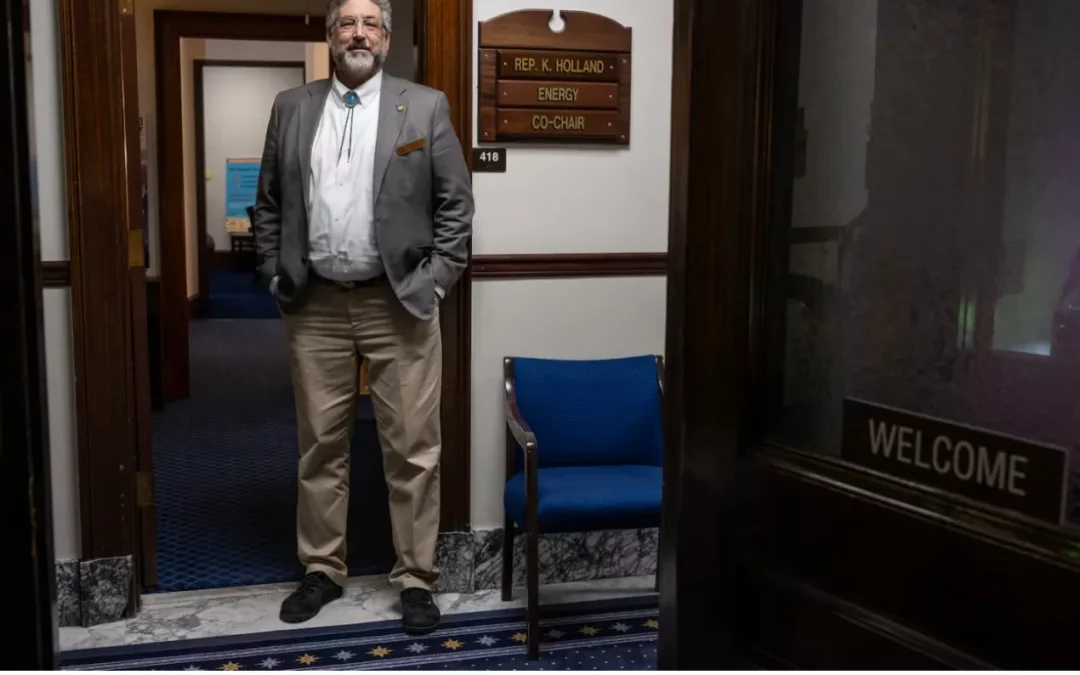
State Rep. Ky Holland represents House District 9, from Basher to Whittier, and is committed to building a future-ready Alaska through bipartisan collaboration, smart investment and community-driven solutions. He encourages residents of District 9 and all Alaskans to share their ideas, stories, and concerns. Rep.Ky.Holland@akleg.gov