
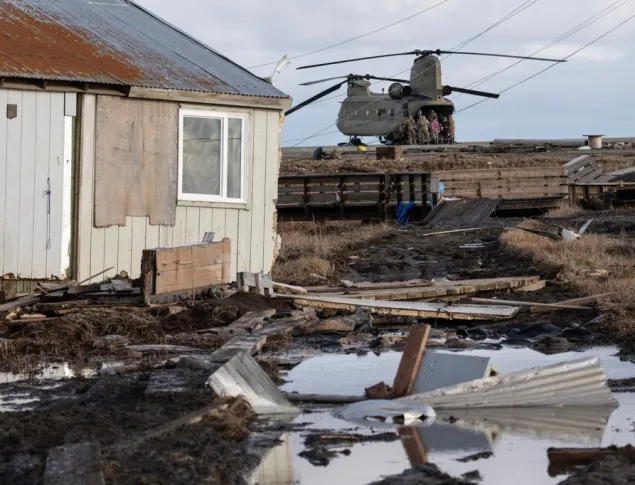
Recovery from storms like Halong must go beyond short-term aid—we must invest in long-term, locally driven housing and resilience.
I’m thankful for the Municipality of Anchorage’s gracious and rapid engagement in arranging initial temporary accommodations for residents displaced by the Halong storm in the YK region. This evening, I also heard a positive report from School Board president Carl Jacobs, sharing plans to ensure that the kids brought into town will be supported with schooling and efforts to support their success while they are in Anchorage.
While concerned for the families’ initial care and support, I’m also looking ahead to the process of rebuilding the communities, informed by the long-term effort to rebuild the community of Newtok in Mertarvik. I’m also aware that the broad hazard exposure of high water and future storms is not limited to the recent communities destroyed by Halong or those affected by Merbok.
I’m concerned that we will not invest in the future of these communities and relegate each as it is severely damaged to being relocated or eliminated. At the same time, I’m aware of the lessons from Mertarvik, where the first phase of houses designed and built by Alaskans to local design requirements and building standards have been valued homes. In contrast, other later phases of work that did not follow local high standards have quickly failed, as reported in the ADN. We have learned this lesson too many times, and we don’t need to learn it again after recovering from Halong.
I view the investment in recovery as a multigenerational opportunity to finally invest in long-term housing and infrastructure-building capacity in our remote rural communities to support building healthy homes and, when necessary, moving and rebuilding. I’ve worked with innovative new companies with experience that want to be a part of building new industries and jobs so that we can not only rebuild these communties, but create a long term regional economy to support increasing the resilience of all of the coastal communities so that they are prepared to withstand future storms and sea level changes the next couple generations of Alaskans will face.
Further, this capability for remote rural housing can also meet future needs for growth, as well as projects and economic development that may come with the Port of Nome and Donlin projects, which will also require housing for the projects and future residents.
I urge you to ensure that the goals, rebuilding plans, and funding are channeled into building up local capacity, capability, and competitiveness, and avoid the risks of handing the design and project authority over to others who are not familiar with Arctic requirements and the unique characteristics of these communities. If these future funds are not wisely invested in Alaskan solutions, they could easily result in more expensive problems to fix in the future or replace again.
These storms should not be the end of our remote village communities, but the beginning of a new era of opportunity and resilience, able to face the millennia ahead.
Ky
Rep. Ky Holland
For additional updates and resources, visit the original post on my Rep site.